
The Reef Institute is spending Monday putting recycled-concrete “wave tiles” in the water at the Jupiter Inlet Lighthouse, a small new habitat designed to grow stronger as coral and sea life move in.
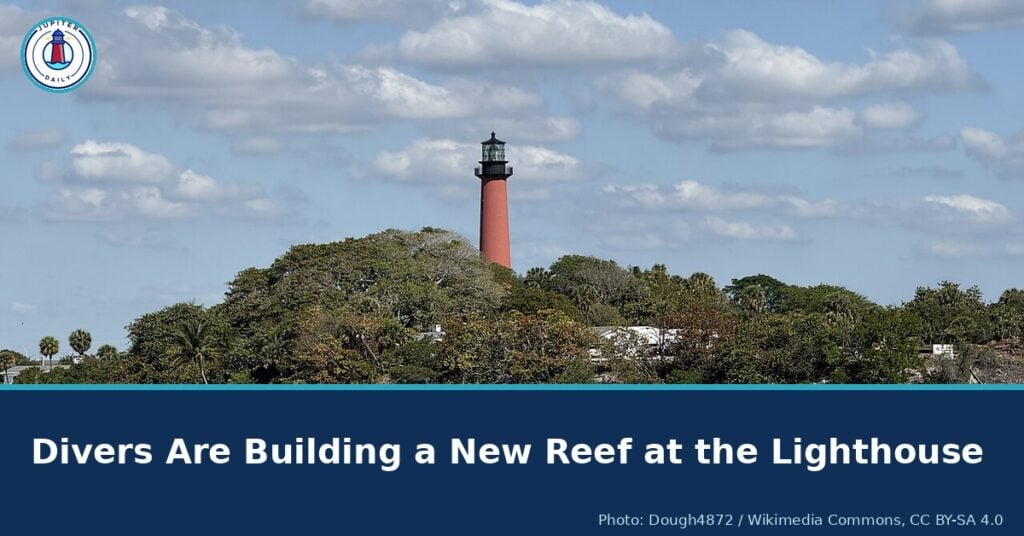
If you are anywhere near the Jupiter Inlet Lighthouse today, you may spot divers working in the water. The Reef Institute, a West Palm Beach nonprofit devoted to saving Florida’s coral, is installing artificial reef structures at the Jupiter Inlet Lighthouse & Museum on Monday, Nov. 23, with the work expected to run from about 9 a.m. to 4 p.m.
This is working conservation, not a public program or a ticketed event. It is happening during the Lighthouse’s regular hours, and the Institute suggests checking with the Museum before making a special trip to watch.
What is going in the water
The structures are built from interlocking pieces the Institute calls “wave tiles,” part of its Marine Living Structures Initiative, a collaboration with the design firm Michael Singer Studio. The Reef Institute leads the science, research and monitoring; the studio leads design and fabrication.
Every detail of the tiles is meant to invite marine life in:
- Holes and grooves sized for crabs, snails and small reef fish
- Textured surfaces where young coral can settle and attach
- Small spires where scientists can transplant coral by hand
- Spacers between pieces that can be opened up for larger predators or tightened so only small animals settle in
The idea is that the pieces lock together into assemblies that actually get stronger as coral and other life grow over them. The Institute calls it “green-gray” infrastructure: part habitat, part shoreline protection, with a side benefit of helping clean the water.
A greener kind of concrete
The tiles are made from a cement-based mix with 70% recycled content. The Institute says the material is stronger, holds up better in seawater and carries a lower carbon footprint than the concrete normally used for marine construction. Those are the group’s own claims, based on more than three years of testing.
Earlier prototypes are already in Palm Beach County waters: a 10-by-10-foot system off Riviera Beach and a single tile at Peanut Island, where weekly checks found fish and invertebrates living under it.
Why here, why now
Florida’s coral reef has lost the overwhelming share of its original cover to bleaching, disease and other stresses. The Reef Institute puts what remains at less than 2% of the original coverage, and it is quick to say these structures are not meant to replace natural reefs. They are meant to give the reefs that remain a boost, one small patch of new habitat at a time.
The Lighthouse shoreline is a fitting spot for it. The same waterfront is in the final stretch of the Bureau of Land Management’s $16 million shoreline stabilization project, which JupiterDaily covered last week ahead of its Dec. 3 public opening. That federal project includes its own experimental reef structures and a snorkeling area set to open Dec. 20. Today’s installation is a separate effort by the nonprofit, not part of the federal project, but the two point the same direction: a shoreline rebuilt to work for wildlife as well as for people.
The Reef Institute is based in West Palm Beach and also runs a “Rescue to Reef” program that keeps rescued corals in a land-based genetic biobank and replants coral on damaged reefs. More on today’s project is at reefinstitute.org.
